



 Flight Attendants Aren’t Just Plane People

Originally Written in 2002 – Updated 2026.
By Sonya Jenkins
Upon arriving in New York in February 1993, the flight crew was notified that the World Trade Center had been bombed. Instead of staying at the hotel adjoining the WTC, as previously planned, the crew was now to stay at a hotel in Upper Manhattan.
The day following the September 11 terrorist attacks in 2001, the flight crew was informed that the Washington, D.C., portion of our trip would not be operating, as airplanes across the nation were grounded for at least two days.
Both incidents — in 1993 and in 2001 — affected me in ways I never could have imagined. I did not know anyone personally who had died or been injured in either attack, but still, I felt a great sense of loss. I was immobilized with fear and sadness.
Nevertheless, I thanked God for His mercy and prayed that He would comfort those who had lost loved ones. I prayed that peace would be restored to our country and the world.
The attacks hit close to home for me because I was one of the recipients of the messages sent to the flight crew in both 1993 and 2001. I traveled to New York on that cold day in 1993 and was scheduled to lay over at a hotel adjoining the World Trade Center on the very day it was bombed. In 2001, my schedule had me flying to Washington, D.C., on September 12 — the day after the terrorist attacks on the World Trade Center and the Pentagon, as well as the crash of Flight 93 in Pennsylvania.
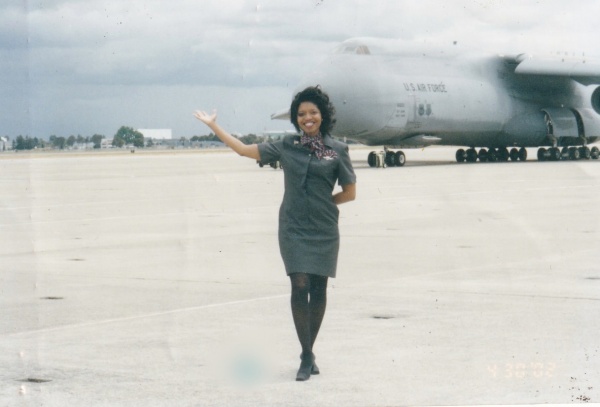
You see, along with being a writer, interviewing celebrities, writing freelance articles for newspapers and magazines, and creating my own magazine, I was also a flight attendant. For more than three decades, I flew the friendly — and not-so-friendly — skies and traveled to some of the most interesting places in the world.
Throughout my career as a flight attendant, I always felt that flight attendants never received the proper respect or recognition they deserved. My toes were stepped on many times, literally and figuratively, by people who assumed we had little intelligence and regarded us as “waitresses in the sky.”
Prior to the September 11 attacks, a speaker at a major festival told a packed audience about an experience she had on an airline where a flight attendant questioned her seating. The speaker seemed offended that the flight attendant did not intuitively know that she was a Ph.D. who was supposed to be sitting in first class. The speaker said, “When I got off the plane, I was still Doctor [so and so], and she [the flight attendant] was still serving peanuts!”
The audience roared with laughter.
I left the room.
In case you don’t know, flight attendants aren’t just people who serve peanuts and drinks. During my years in the profession, I met flight attendant/district attorneys, flight attendant/real estate agents, flight attendant/nurses, flight attendant/psychologists, flight attendant/authors, flight attendant/models and actors, flight attendant/teachers, and even flight attendant/pilots.
It was a flight attendant who encouraged me to return to college to earn my degree after he completed his undergraduate and graduate degrees while he was in his 50s.
Flight attendants have saved lives in midair and have assisted in all kinds of emergency situations. There is no doubt that flight attendants were truly on the front lines during the September 11 attacks — risking their lives while trying to keep passengers and cockpit crews safe aboard flights that were ultimately doomed.
It takes good communication skills, poise, and patience to be a flight attendant. In times like these, it takes great courage.
Perhaps the flight attendant who questioned the aforementioned festival speaker about whether she was sitting in the right seat wasn’t being biased toward her at all. It could have been that the flight attendant had previously encountered a passenger trying to force his or her way into first class, giving the flight attendant every reason to ask questions.
Now that I’ve given props to flight attendants, each of us has a responsibility to respect the profession of another, no matter what our own profession may be. If we are not knowledgeable about someone’s job duties or the policies they are required to follow, it is wise not to jump to conclusions.
The proper thing to do is to approach the person — or someone in authority — in a non-threatening way and ask them to explain the actions or policies that seem offensive.
During times of clear and present danger that threaten our world — in the aftermath of the September 11 attacks, amid anthrax infections and scares across the nation, and during an ongoing war — we must pull together and remember that who we are on the inside speaks louder than what we do professionally.
Although we should always seek our prophetic destinies, which may entail choosing our ideal career paths, our confidence should not lie in our jobs or our degrees. Job titles and advanced degrees did not save those who were struck by tragedy on September 11, and they will not save us.
My pastor, Dale C. Bronner, once said, “You can quit what you do, but you can’t quit who you are.”
In a time when companies are downsizing, layoffs are inevitable, and the economy is unstable, we must remember that our lives and our careers are in the hands of God.
Although I have down moments and feel sad when I think about the tragedies of September 11 and all that might happen in the ongoing war against terrorism, I still try to look at the glass as half full rather than half empty.
When I fly, I consider God the pilot, and I totally relinquish control to Him, believing that my flights will be safe. When we are enjoying the ride in life, God sometimes sees it necessary to change our course. But in the end, we get to our destination.
Whether it is a destination we planned, one He planned, or even one created by evildoers, God always has a higher calling or destiny.
Today, I am no longer a flight attendant, but that chapter of my life remains an important part of who I am. My journey has continued to unfold through writing (check out my flight attendant projects below), filmmaking, and acting, with opportunities to bring stories to life both behind and in front of the camera.
The profession may have changed, but the lesson has not: we must trust God and believe that His goodness will ultimately prevail.
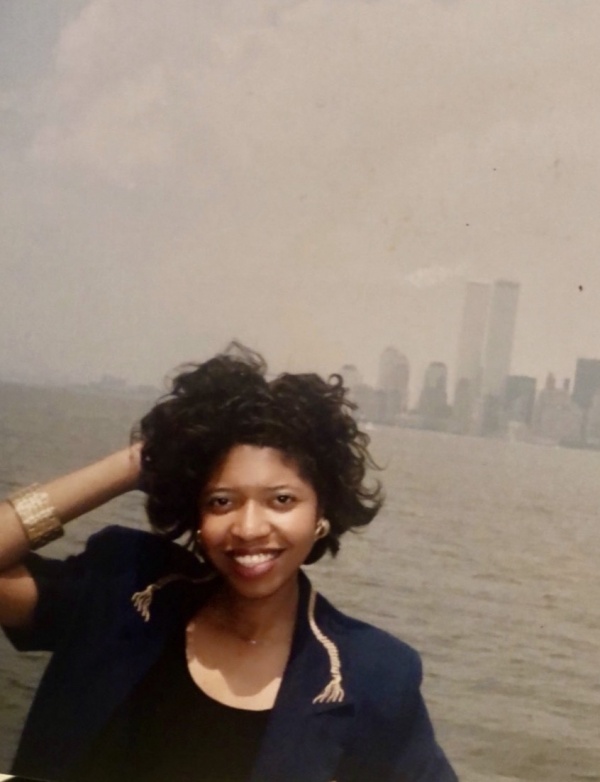
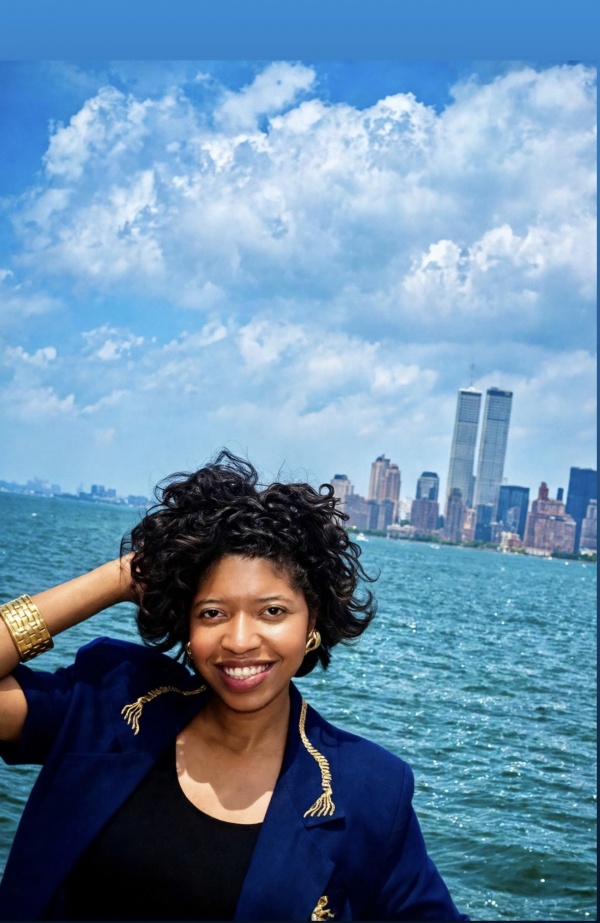
Sonya Jenkins — Creator of “Smiley, The Flight Attendant” short animated film and children’s book.